One Year of Getting Personal on My Professional Socials
…what I learned and why I don’t regret being authentically vulnerable in public

…what I learned and why I don’t regret being authentically vulnerable in public
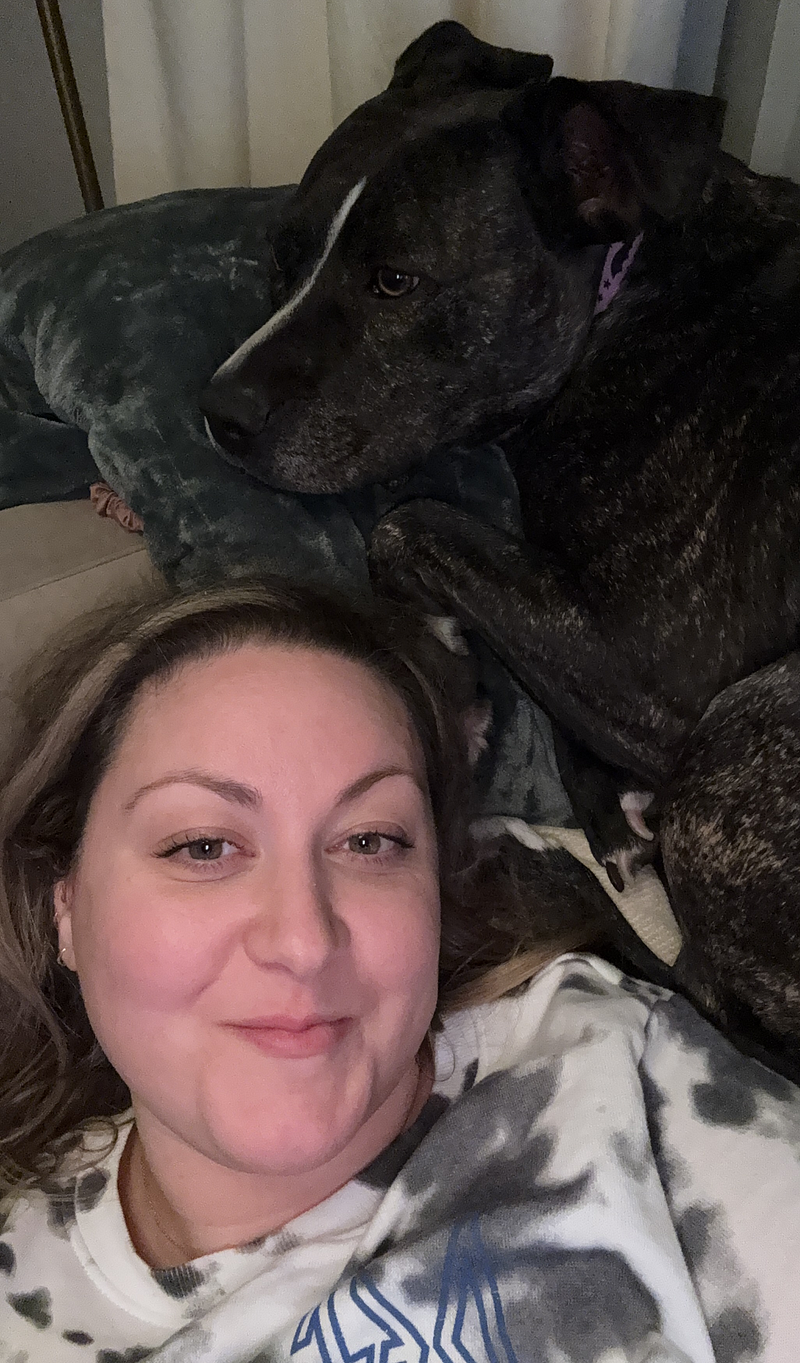
After an extended period of internal conflict, I established a professional social media presence in 2025. As I wrap up 2025 and look ahead to 2026, I have been reflecting on what was a bit of an experiment, professionally and personally. Did I stay true to my values? Did I hit my goals? Was it worth the energy I put into it? What did I learn? Let’s dig into all these questions by starting with where it all began.
The Why and How
At its core, my professional social media presence is a byproduct of my love for and interest in writing. Writing has felt like home to me for a long time, something that began with my love of reading as a young child. I was engrossed in reading — consumed by fantasy, dystopian, and mystery novels, like The Wizard of Oz, Narnia, Harry Potter, Boxcar Children, Nancy Drew, and Margaret Atwood. As I progressed through Elementary and Middle school, I began writing poetry, then eventually song lyrics. The poetry was something I shared more freely, but the song lyrics stayed tucked away. When I went off to college, I was able to further indulge my interest in writing as a political science major, assigned lengthy papers on topics spanning from international conflicts to black-market economics to the psychological aftermath of genocidal warfare. College felt so freeing; I immensely enjoyed the ability to write as a means of expressing my thoughts and research.
After graduating from college, I stopped writing almost entirely because there was no longer an external forcing function to produce work. After making the decision not to go to law school (which would have inevitably included more papers), I was relegated to the corporate world of meetings and emails, oh, and Pidgin (yes, there was life before Slack). In this new context, navigating from accounting/finance to talent acquisition and human resources, I did not flex or indulge my writing. I traded this outlet for being highly social, both at work and in my personal life. I spent nearly all of my time in the company of others. That’s been one major shift I see for myself — I go through seasons in life where I am more internal and then more external. My writing intensity seems to mirror the periods of deep internal time, so for a long time the writing almost entirely stopped.
In 2020, I was reading a Brené Brown book and found myself pausing frequently to jot down thoughts on my phone or laptop. I was so inspired by her work that I couldn’t just read the book; I felt utterly compelled to create — almost in parallel to the consumption. This reignited the spark that had lain dormant for so long. With external social obligations almost entirely digital and much less frequent, I found myself delving deeper into these thoughts and notes. Then in March 2021, I contracted COVID, and those months of illness and recovery created a distinguishable delineation in my life. For better or for worse, I started to think about life as before and after I got COVID.
With the aftermath of COVID and my recovery, I began to write. I experienced tremendous anxiety and panic attacks, which lasted for nearly nine months after contracting COVID. Unfortunately, this lingering symptom hasn’t ever fully gone away. As a result I engaged heavily in writing as a means to help mitigate my anxiety and express the complex and difficult experiences I was having emotionally and physically. While I knew at the time that the writing was soothing, I did not fully understand how it can calm your brain when you are in a heightened state. When you write during a panic attack or the anticipatory onset of one, you’re forcing your prefrontal cortex to engage in language production, which creates a neural competition that actively interrupts the panic response. Your brain cannot sustain the complex cognitive work associated with translating emotions and feelings into writing AND have the amygdala engage in a panic response at full intensity levels. ¹²³ My journey back into writing was a coping mechanism and a tool for my anxiety and panic, even if I didn’t fully understand my body’s response from a physiological perspective until later.
So there I was writing again, and that continued for a few years. Notes stacked up on my phone and in Notion. Processing my life, the ups and downs I was experiencing, and also my thoughts on organizational psychology, design, business, etc. It got to a point where I started to wonder, should I do something more with this? And I think I eventually employed a ‘if you build it, they will come’ mentality to my writing. I had long ago lost the “need” to write, prompted by an external force or structure, but I developed my own need, driven by the mental and physical health challenges I experienced. I started to think, “I’m writing for myself, and just happen to be sharing it with other people.”
The Goals I Set
In April of 2025, as I became more active on socials, I decided to establish metrics to guide my success and goals to steer the experiment for my first year. While I knew it wouldn’t be a full 12 months, I wanted to think in calendar-year terms and what I could do before the end of 2025.
For LinkedIn, I arbitrarily set a goal of 800k impressions and 10k followers, starting from 2.2k. As the year progressed and I saw what was unfolding, I raised my expectations. By the end of the summer, I settled on 1.3M as the right number for year-end targeting.
For my Medium blog, I aimed to publish one post a month, on average, and set no reader/subscriber goals. I kept it pretty loose as the numbers mattered less than having something to aim for, a way to measure whether this experiment was working at all.
The Values I Employed
But if I was going to do this, like with most things I do, it felt important to create my own set of values to guide how I’d spend energy and space on each platform. So I established the following:
Post when you want, not on a schedule. LinkedIn’s algorithm rewards consistency through daily posts, weekly cadence, and constant activity, but I decided not to play that game. When a topic compels me, I write and post, usually immediately once it’s finished, and if I don’t have something meaningful to say, I don’t say anything at all. This approach looks like bursts of content rather than a steady flow, and I’ve made peace with that.
Write for yourself first, LinkedIn second. Every so often, I’ll refer back to my digital notebook to see if there’s anything that meets the bar for sharing more broadly, but the content is first written for me and then refined for others.
Work with the algorithm strategically. The algorithm prioritizes LinkedIn’s own content, particularly job posts. After seeing what Dr. Cornell Verdeja-Woodson did to amplify DEI roles, I started reposting jobs from companies and positions I find genuinely interesting. For me, this approach enabled me to share something that interested me with low content creation effort and no dilution of my own brand and writing.
Be authentic in a sea of AI content. The algorithm rewards constant activity, and it’s unrealistic for any human to consistently produce witty, inspiring content at that pace (I think?), which is why so many people turn to AI to fill the gap. I use AI to review and edit for clarity (I have a Claude project that knows my writing style), but the thinking and substance are always mine.
Protect your time, energy, and mental health. Platforms like LinkedIn want their products to be addictive, creating dopamine hits that keep you constantly checking for notifications and engagement while they focus entirely on activity, eyes, and ads rather than healthy boundaries or meaningful connections. I decided early on not to let it become another doomscrolling app in my life by going on LinkedIn with specific purposes but not allowing myself to just peruse aimlessly.
The Results
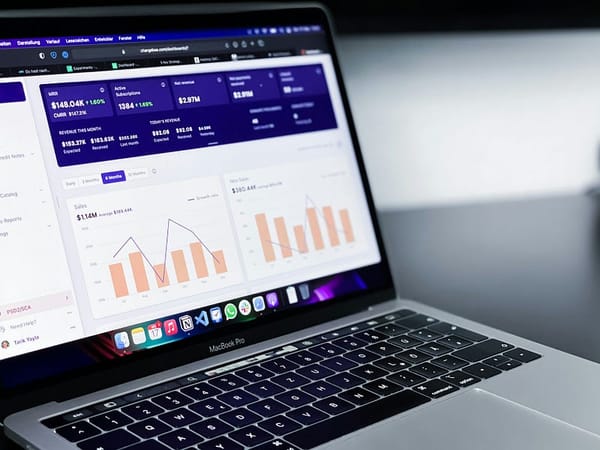
On LinkedIn, by year’s end, I’d reached 1.4M impressions (check!) and 9.8k followers (so close!). On Medium, I published 8 blog posts (check!) and had about 1,000 reads of my Medium blog (yay!). When I dug into the analytics, what performed best surprised me in some ways and confirmed my instincts in others.
LinkedIn: My top-performing organic LinkedIn post was my announcement that I joined ChartHop, which garnered over 40k views, which makes sense since job change announcements remain one of the most reliable forms of engagement on the platform. My most resonant posts after that spanned a range of topics, including a personal observation about how AI writing was influencing my own writing style that drew 18k views, an ask about the best “people professionals” who don’t speak publicly that reached 12k views, a post about the best HR communities that hit 10k, and a vulnerable post about my personal health journey that also reached 10k views. My top-performing posts, resharing job adverts, exceeded 100k on a number of occasions.
Medium: My most-read piece was “This Almost Didn’t Happen,” exploring my personal health journey and its intersection with the workplace, while my second most-read was a reflection on one year into fractional work, examining what I’d learned about that model and how it reshaped my approach to career and professional identity.
So what did I learn?
Personal narratives deserve to take up space in professional spaces
I’ve always really disliked the oftentimes performative oversharing and vulnerability that seems to dominate LinkedIn. As I started to write content myself, it raised the question: “What type of content is worth sharing and to what benefit/end?” The more personal I got, the more I realized there’s also this wildly intersectional element to it. In human resources, we are responsible for leading or influencing decisions that materially impact an employee’s life and well-being. Benefits design, compensation, leave policies, performance management, workplace accommodations — these are all company policies, yes, but in a country where so much of our social welfare system is left up to corporate employers, and where those employers’ interests can be skewed by the privileged who sit at a generous distance from everyday employees, understanding personal realities becomes critically important.
My own experiences as a queer white woman with chronic illnesses has given me insight into how both disability and chronic illness remain underserved populations in most workplace conversations. Writing about my health journey and how it intersects with my work wasn’t just personal catharsis, but rather I was (and am) being honest about the reality that we don’t leave our bodies, our identities, or our struggles at the door when we come to work. The engagement on these posts confirmed that people wanted to hear more about the reality of my own intersectional life because often it resonated with their reality too.
Virality does not equal competence
Content creation is an entirely different skill set from being an operator. I know phenomenal executives and leaders who would struggle to write a decent LinkedIn post, yet I would still call them every time I need something in their purview because their worth is beyond what any post could possibly capture. I also know prolific LinkedIn creators who struggle to find work. The platform has created a strange economy that rewards content creation while conflating it with professional competence, but these aren’t the same thing, and your LinkedIn presence isn’t a proxy for your professional value.
Throughout the year, my values evolved as I navigated not just LinkedIn’s algorithm but what I was willing to become to succeed on it, and the real value wasn’t simply “don’t post on a schedule” but rather staying selective about what I was willing to perform for an audience.
Where This Leaves Me
I don’t need LinkedIn for income, which I’m grateful for, so going forward, it will continue to be a reflection of my professional life, remaining authentic, selective, and honest as I post when I have something to say and ignore it when I don’t.
The experiment taught me that you can succeed on LinkedIn without losing yourself to it, and that writing, even in a professional context, can still feel as intimate and necessary as it did when I was young, filling up notebooks with poetry. The difference now is that I’ve found a reason to write again, and people who find meaning in my words, and that matters more than any impression count ever could.
I was writing for myself, but am motivated by and deeply grateful for every message, email, Slack, DM or text message where someone said they appreciated what I wrote.
So did this experiment work? I would say it did.
References:
- Messina, I., Sambin, M., Beschoner, P., & Viviani, R. (2016). Changing views of emotion regulation and neurobiological models of the mechanism of action of psychotherapy. Cognitive, Affective, & Behavioral Neuroscience, 16(4), 571–587.
- Cromheeke, S., & Mueller, S. C. (2013). Prefrontal inhibition of threat processing reduces working memory interference. Frontiers in Human Neuroscience, 7, 228.
- de Voogd, L. D., & Hermans, E. J. (2021). Meta‐analytic evidence for downregulation of the amygdala during working memory maintenance. Psychophysiology, 58(7), e13828.